
Bridges, Not Rescues: Rethinking How We Support Refugees
By Marwah Aryantha, Founder of Bridges for Hope and Peace First Development Grantee
Growing up in a space where I never had to worry about fleeing out of structural fear, I always had the privilege of prioritizing my growth. From a young age, my parents made English the main language my sister and I spoke at home — our house was filled with books, and entertainment came in the form of puzzles, chess, and other mind-stimulating games. I had the freedom to explore my passions, from math and English lessons to drawing and violin. When I entered university, I had the freedom to choose my own path, one that opened doors of opportunity and led me to where I am today.
My university years allowed me to explore different areas. It was not until I had the opportunity to volunteer at Malang’s Children with Disability Centre that I became drawn to explore social work further. The next thing I knew, I had spent almost my entire university years in the social impact space. Towards the end of my degree, I began learning about the refugee landscape as I dove deep into my undergraduate thesis. “Desperate,” “Hopeless” — these were words that often portrayed the community’s situation in many articles I read. My perspective grew into seeing the refugee community as one that needed saving, and that “saving” had to come with grand gestures. I had come to believe that in order to create impact, it had to arrive like a tidal wave.
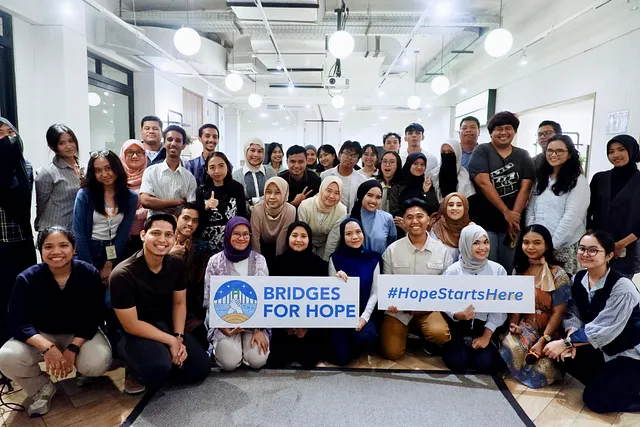
In Indonesia, it is already difficult for refugees to meet basic needs, and pursuing education or skills development to pursue their dreams often feels out of reach. One day, Darian (pseudonym), a refugee friend, reached out, desperate for learning opportunities. He asked if my network could open any doors for him. He reminded me of the privileges I carried, the connections I’d built, the access I had, and how they could open doors that often remain out of reach. It was from this realization that the inaugural Refugee Digital Skills Course was initiated — a small, intentional learning space for five individuals, which slowly grew into a community: Bridges for Hope. Over time, it became more than a social movement.
For me, establishing Bridges for Hope goes beyond my love for creating social impact. It was rooted in the realization that I had the tools needed to help, guided by a value I hold dearly: that with privilege comes responsibility, even if it meant helping just one person. I believed in the power of the ripple effect, so I started Bridges for Hope hoping it would help my refugee friends, but along the way, it was I who got inspired the most. Despite the structural barriers, most, if not all, of my refugee friends remain deeply dedicated, fueled by dreams and hope. From one community service to another, I began encountering genuine interactions with the refugee community.
I met Tariq, who joined our inaugural Refugee Digital Skills Course with enthusiasm and curiosity, dreaming of starting his own business one day. I met Claire, who spent most of his days creating music, dreaming of stardom. I met Dalia, who continuously empowered other refugee women through nail art classes, despite the structural barriers of living in transit. I met Lena when she applied for Bridges for Hope’s volunteering program; she later became part of my team, consistently demonstrating commitment and a dedication to learning and growing.
Through these encounters, I began to question the mainstream narrative that frames refugees as people who need saving. I realized that such a perspective is neither empowering nor sustainable. I learned that what each individual truly needed was access and opportunity. They hold immense potential, determination, and ambition — qualities that, when paired with the right skills and knowledge, can open doors to their dreams. Expanding access does not “save” them; it creates pathways for them to move forward on their own terms.
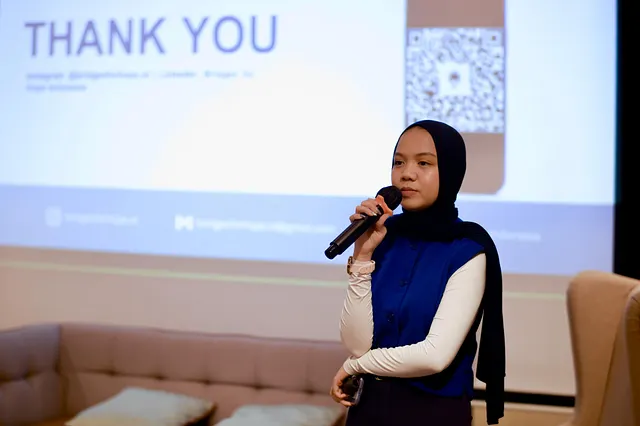
With the support of Peace First, we began turning ideas into action. We launched our inaugural Refugee Digital Skills Class, followed by a Refugee AI Upskilling Workshop. We facilitated refugee-Indonesian cultural exchanges, engaged in media conversations, and participated in policy-level discussions. From one program to another, community interest grew by 156%, knowledge improvement was evident, and post-event evaluations reflected overwhelmingly positive feedback. Even a single day-long event can make a meaningful difference in our refugee friends’ lives.
In one of our workshops, we witnessed the students’ growth firsthand — from struggling to operate a laptop to confidently creating documents in Microsoft Word, Excel, and PowerPoint. Watching that transformation unfold was a reminder that these skills represent far more than technical literacy; they reflect an ability to adapt to an ever-evolving world, equipping students not only for the uncertainties of displacement but for the life that awaits them once resettled.
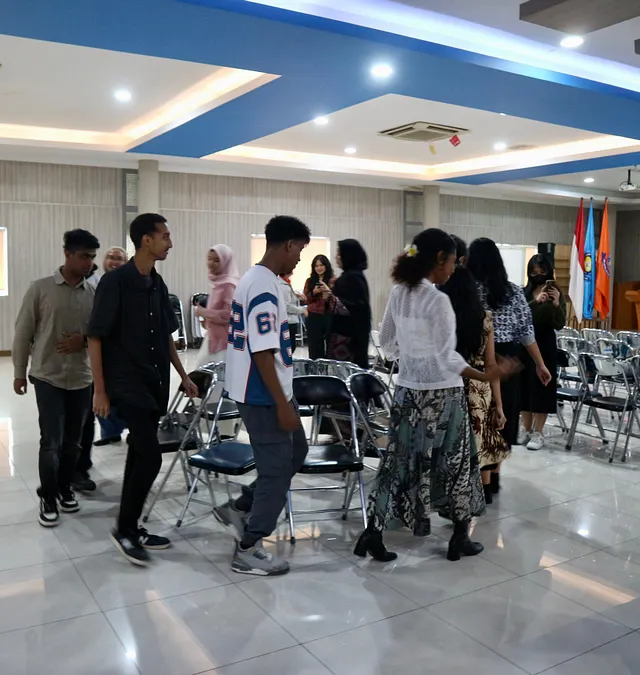
During a one-day exchange event, one participant shared, “There is so much to gain from attending an event like this and learning from one another. I took part in the activities, explored different cultural showcases, and felt truly welcomed.”
This year, we are humbled and honored to be selected as a recipient of Peace First’s Development Grant.
As our next step, we are launching the Refugee Creative Learning Program; an initiative designed to equip refugee youth with future-ready skills through art and photography, providing a creative space to strengthen their confidence, storytelling capacity, and creative agency.
At the end of the day, Bridges for Hope gave me a safe space to continuously reflect, learn, grow, and contribute, constantly lighting a spark in me. To this day, Bridges for Hope continues to serve as a safe and intentional learning community that fosters exploration, creativity, and confidence — one that allows the community to explore their potential, building paths one step at a time.
In my university years, I always pictured creating impact as requiring grand gestures — unlimited funding, a full-blown team, and a perfectly charted path forward. However, growing with Bridges for Hope alongside my refugee friends serves as living proof that a simple gesture can go a long way. I started with a small act to make one person feel hopeful, and in return, it was my refugee friends who continuously reminded me of what hope, determination, and resilience truly look like — and who ultimately proved the power of the ripple effect.