

The Shift in Donor Funding: From Solo Changemakers to Community-Led Impact
By Grace Brennan, Narrative Journalism Fellow at Peace First
People with incredible stories often do incredible things.
It makes sense, then, that in the social impact funding space, donors have previously been drawn to ‘hero’ changemakers. Not only have donors wanted to back individuals with big plans and motivation, but the ‘solo hero’ narrative has lent itself well to marketing projects and funds.
Today, however, the approach has shifted. Single changemakers shouldn’t have to carry the weight of systemic problems, nor the pressure of delivering expected returns. The ‘solo hero’ narrative can actually limit the scope of impact. Donors are instead interested in equitable, community-rooted giving that supports networks of people working together, sharing leadership, and building long-term capacity.
In May 2025, Peace First conducted research to better understand the lived experiences of young changemakers who have received support from the organisation. The insights revealed why donors are (and should be) moving away from the solo hero narrative.
Included in the research were recipients of the Peace First Soil Grant, which embodies moving away from the ‘solo hero’ narrative. The grant supports groups of changemakers aged 13 to 25, who live in places with limited access to funding and mentorship. It’s activated through local partner organisations (called ‘Changemaking Communities’) that verify the problem and solutions the young groups bring forward.
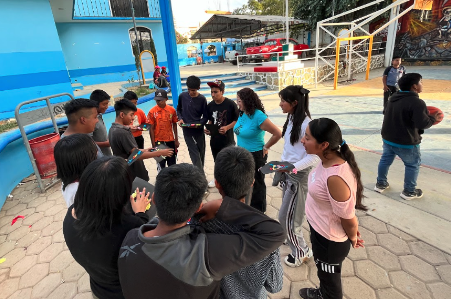
The Soil Grant is unique because it focuses on group learning. Young changemakers are given funding that integrates them with their community and fosters collaboration. Meanwhile, the Changemaking Communities serve as role models for the grant receivers, guiding them through the realities of their mission and connecting them with the real people they impact.
Here’s what the report told us about community-driven change.
Note: The report was carried out by Olatomiwa Olusesi, a researcher at the University of Memphis, and gathers feedback from young Peace First grantees across Africa, Latin America and South Asia. Data was collected through interviews with recipients of mini grants and the Personal Development Fund. Changemakers’ projects span mental health, gender equality, education, climate justice, and more.
Investing in one person limits impact cycles, spheres of influence & personal support
Investing in individuals can mean offering shorter-term support. Changemakers have to demonstrate traction by themselves, which is harder to achieve than as a group, and if they fail to meet expectations, they may be at risk of not receiving funding again from donors.
One-off grants for individuals don’t tend to come with structured follow-up either, so recipients can’t scale or sustain their work. The result is that impact is contained to shorter cycles, and individuals’ reach to bigger communities or affected peoples is restricted.
In the Peace First report, interviewees highlighted that societal beliefs could make ‘solo hero’ narratives more complex, too. Older stakeholders would sometimes dismiss young changemakers’ efforts (especially in patriarchal or age-hierarchical societies). “They told me I was wasting my time. In our community, people believe only older folks have wisdom”, Tamir Saoud, a participant of the Peace First hackathon, told us. If donors only seek individuals to invest in, they shrink the sphere of influence. Supporting (age) diverse teams allows for initiatives that resonate and are championed by more people.
If donors only seek individuals to invest in, they shrink the sphere of influence. Supporting teams allows for initiatives that resonate — and are championed by — more people.
Elsewhere, changemakers reported that when given funds, they have been unsure about whether the money is only for business use. For example, Peace First’s Personal Development Fund is intended to support the person, not just the project.
“I didn’t realise it was for personal use. I used it for my project,” said Ruth Olujobi, Founder of Blooming Daily.
Young founders, entrepreneurs, and project heads are some of the most vulnerable people to burnout and anxiety. Donors that target ‘solo hero’ stories risk isolating individuals and placing more pressure on them , which only makes their work more fragile. Investing in teams reduces the burden on project leads and can contribute to a culture of using a portion of funds for team well-being.
Changemakers are team-oriented; investors should be too
The people changing the world for good are never doing so in a silo. They’re constantly working with internal teams and external communities to grow. Donors who invest only in ‘solo heroes’ miss the value of, and opportunity to foster , these extended networks.
Peace First changemakers shared that they already work with different people to find ways to sustain their impact beyond the initial funding. For instance, Andrea Remmes, co-founder and CEO of Erandi Aprende has adopted a hybrid strategy for her work. “Now that we are a social enterprise, we’re looking at angel investors, grants, and sales”, she says.
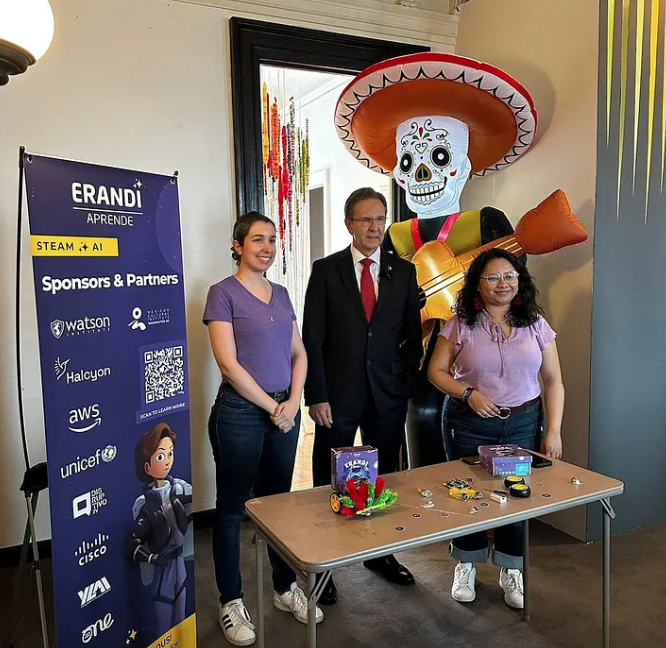
Angelina Annobil, Founder and President of The Builders’ Foundation, has turned to community ownership: “We create advisory boards and make sure the community owns the project”.
Meanwhile, other grantees have partnered with schools and local groups to integrate programming like environmental education or reproductive health into their existing community structures.
As changemakers interact with so many people, investors should be fueling teams (not individuals) from day one to shape stronger organisational models and action. The broader approach nurtures socialised, informed, and healthy people and project dynamics, translating to greater innovation and solutions.
The broader approach [of funding teams, not individuals] nurtures socialised, informed and healthy people and project dynamics, translating to greater innovation and solutions.
There’s strength in (social and financial) numbers
In both social impact and business settings, there’s strength in numbers. More people bring more experiences, more risk assessment, and more problem-solving.
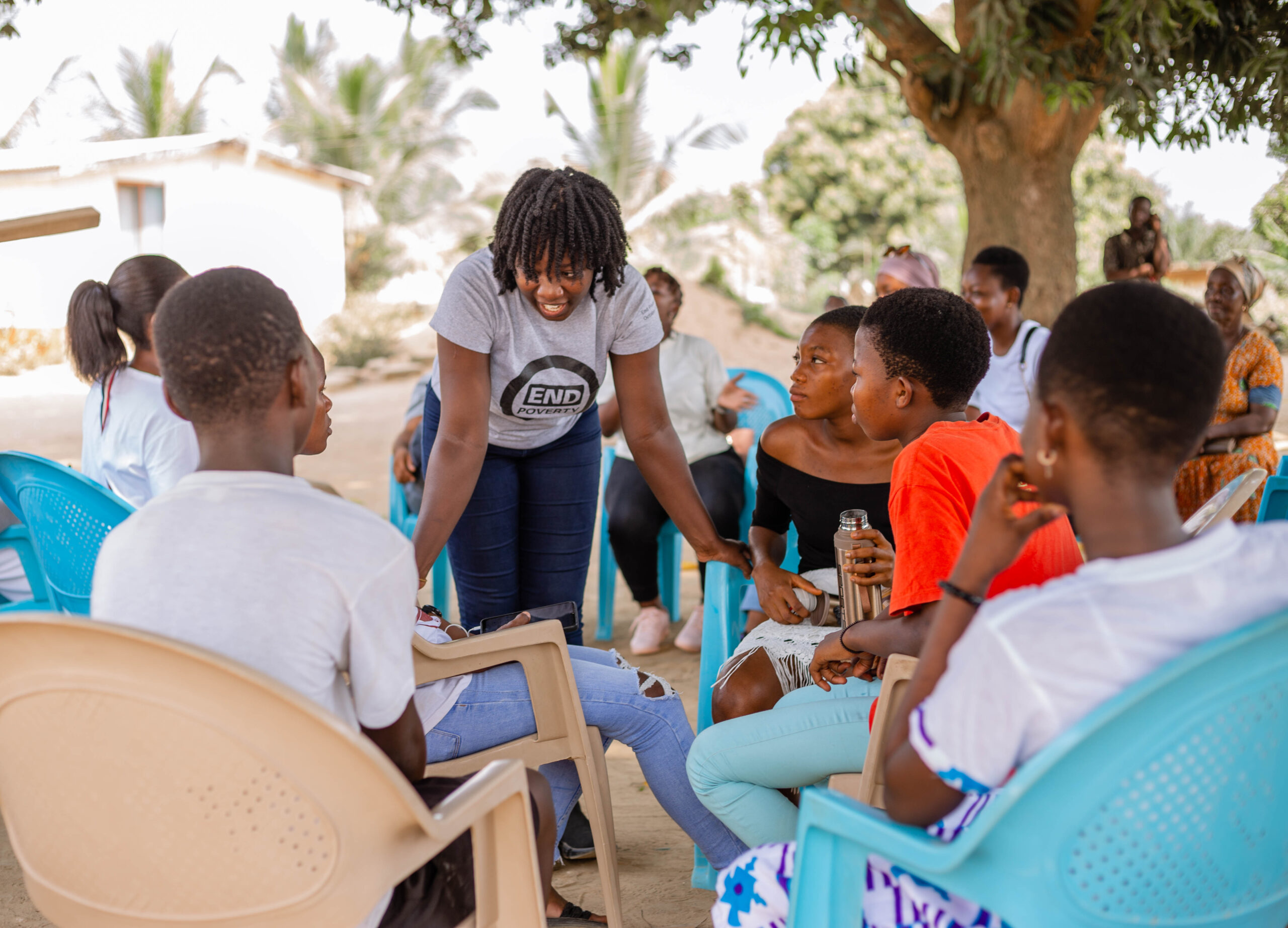
With that in mind, Peace First changemakers expressed in the report that they want to establish capacity for themselves and their projects as early as possible. They want to be able to create teams, measure impact, improve financial literacy and resource mobilisation, and to storytell for advocacy and partnerships.
These capacities are bigger than the ‘solo hero’; they equip teams and communities with the skills to genuinely make projects successful. Donors that give grants to team efforts, not a person, therefore lay the foundation for these capacities to flourish faster and for longer. They let change permeate more deeply through the hands of multiple people.
Donors that give grants to team efforts […] let change permeate more deeply through the hands of multiple people.
Throughout the report, grantees spoke about appreciating what Peace First represents: a rare source of early trust, funding, and validation for young changemakers who are often overlooked by traditional grantmakers. Moreover, Peace First grants like the Soil Grant are oriented around the bigger picture — they seek to power communities, not single changemakers.
With grants like these in mind, the donor landscape as a whole has to continue to journey beyond the ‘solo’ hero narrative to reach community-driven spaces, where money is sewn for and by more people.
After all, everyone has an incredible story. And together, everyone can make an incredible impact.
Ask the organisations you support how they’re thinking about, investing in, and driving change in communities, not just among individuals. Remember that real community impact can start with conversations!