

Local Struggles, Global Connections: How Young People Are Leading Change
By Grace Brennan, Narrative Journalism Fellow at Peace First
The world is facing enormous challenges, from poverty and war to climate change and the rapid rise of AI technologies. These shifts bring both promise and uncertainty, and like other global issues, they are not isolated. Each one is part of the larger systems that shape our lives, which means solutions can be interconnected too.
As we search for how to deal with and overcome these challenges, it is important to remember that no problem exists in a silo. To find real solutions, humanity needs to build stronger ties with people already tackling these issues on a smaller, localised scale.
Changemakers in the Global South often begin by serving their immediate communities, but the solutions they create address much bigger challenges. Their work shows us what is possible when innovation grows from lived experience.
Back in 2022, Peace First grantee Fairoosa, a 24-year-old changemaker from Kerala, India, showed how women’s leadership in agriculture can spark new opportunities. Through her initiative KRISHIKA, she trained 14 women in mushroom production, which has since grown into two enterprises. Her model demonstrates how youth-led projects can strengthen food systems while also creating space for women to lead.
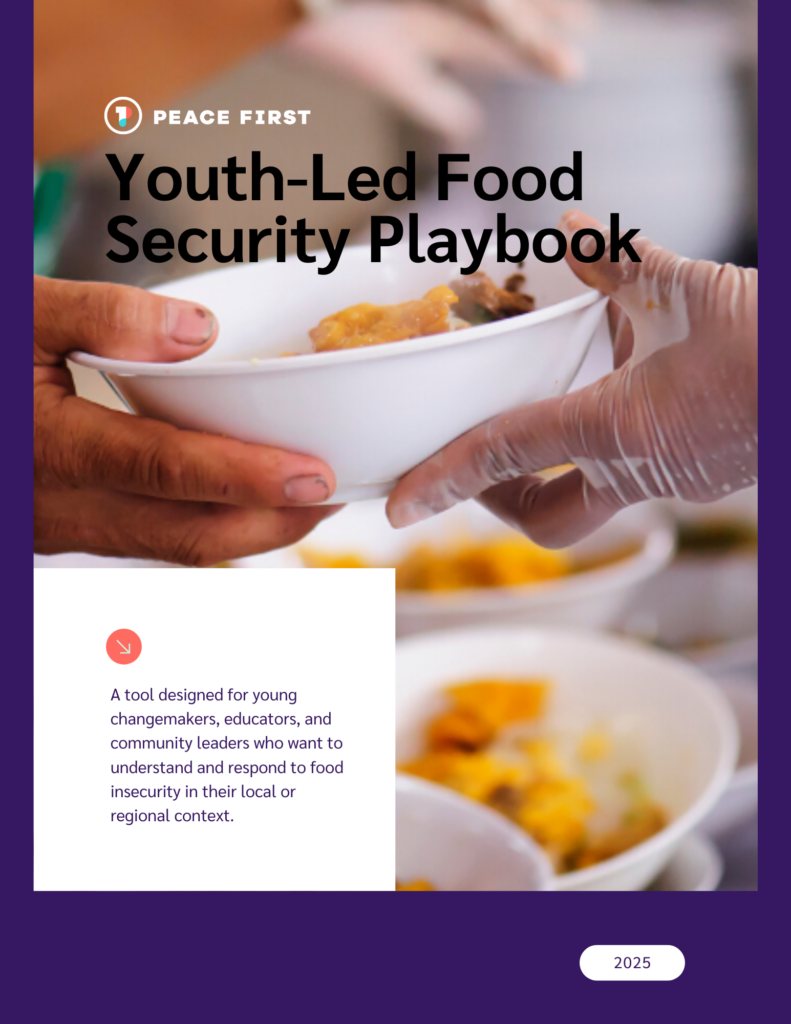
Peace First Research Fellow Zac Tombo carried out similar work in a very different setting. Earlier this year, he released a playbook designed to help young people understand and respond to food insecurity in their own communities. His research showed that food insecurity is less about food supply and more about inequality, limited access, and policies that keep people trapped in cycles of poverty.
Zac discovered that of the nine cities with the highest levels of food insecurity, three were in the United States, including his home city of Baltimore. “You immediately start to notice discrepancies within neighborhoods, and then you start to notice the foundation of food insecurity here [in Baltimore],” he reflected. His findings remind us that food insecurity is not confined to one part of the world but is present across both urban and rural settings, shaped by inequities in access and opportunity.
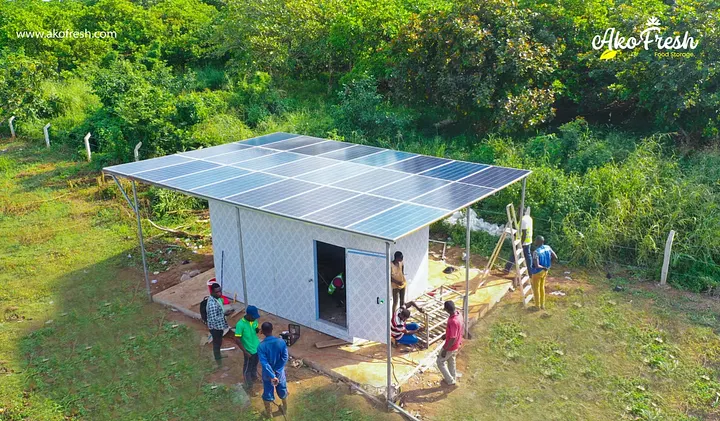
Over 5,000 miles away from Baltimore, in Ghana, young entrepreneur Matias Charles Yabe has taken on the same challenge from a different angle. After growing up in a small village in Eastern Ghana and witnessing widespread food insecurity, he launched AkoFresh, an agritech startup that helps farmers reduce post-harvest losses. AkoFresh uses solar-powered cold storage units to extend the shelf life of fruits and vegetables up to 21 days, compared to the typical five. Farmers pay a daily fee or weekly subscription to use the units, which not only reduces waste but also increases their incomes. AkoFresh is expected to boost seasonal income for local farmers by more than $10 million.
Beyond economics, Matias is also investing in education, committing one percent of every service charge to provide learning materials for farmers’ children. His model demonstrates how tackling food insecurity at the local level can inspire systemic solutions with global relevance.
Cross-cultural exchange creates collective power
These examples show that while changemakers often begin in their own neighborhoods, the solutions they develop can travel across borders. Governments, entrepreneurs, businesses, and civil society all have much to learn from them. Cold storage units like those pioneered by AkoFresh could be used in other industries, such as medicine. Similarly, KRISHIKA’s women-led training model could be adapted to strengthen food systems in other rural communities.
To maximise the potential of these innovations, we need to make sure changemakers are in conversation with one another. Sharing ideas, projects, and resources spreads knowledge and best practices, while also creating awareness of the gaps existing solutions can fill. Just as importantly, cross-cultural exchange builds empathy and a collective sense of purpose in tackling systemic challenges.
Toward global solidarity
We have to stop viewing struggles in isolation. Food insecurity, like many of the world’s most pressing issues, connects back to bigger systems that affect all of us, regardless of where we live.
Many youth-led projects are already moving closer to the roots of these problems. By actively learning from and collaborating with them, more people can access diverse insights and tested approaches that lead to real innovation.
At the same time, this work helps form a global solidarity, one that instills hope and drives positive change for all.
See changemakers. Celebrate them. Share their lessons. Help them scale, because their success is tied to all of ours.